

MMA staph infections are one of the less glamorous realities of combat sports. Fighters spend hours training in close physical contact, often while dealing with cuts, scrapes, mat burns and other small breaks in the skin. That combination can give bacteria an opportunity to cause an infection. Staph does not automatically mean a fighter has poor hygiene, either. The bacteria are common, but the environment of combat sports can make transmission easier.
For professional fighters, the consequences can range from missed training to a cancelled fight or, in severe cases, a much more serious illness. Understanding what staph is, how it spreads and how fighters can reduce the risk is therefore an important part of MMA preparation.

What Is a Staph Infection?
A staph infection is an infection caused by bacteria belonging to the Staphylococcus family. One of the most important species is Staphylococcus aureus, commonly called “staph.”
Staph bacteria are extremely common. The CDC notes that about one in three people carry S. aureus on their skin or in their nose without having an active infection. Carrying the bacteria does not automatically mean someone is sick. The problem can occur when the bacteria enter the body through a cut, scrape, abrasion or other break in the skin.
This distinction is important when discussing MMA staph infections. A fighter can carry staph without having an infection, while another fighter can develop an infection after bacteria enter damaged skin.
Some strains are also resistant to commonly used antibiotics. Methicillin-resistant Staphylococcus aureus, better known as MRSA, is one such strain. MRSA can cause skin and soft-tissue infections and, if an infection becomes invasive, potentially much more serious complications.
That is why staph should never be treated as simply another minor training-room inconvenience.
Why Do MMA Fighters Get Staph Infections?
The biggest reason MMA creates a staph risk is simple: constant physical contact.
Unlike many traditional sports, MMA training regularly involves fighters pressing their bodies against one another while wrestling, grappling, drilling takedowns and working on the ground.
That creates multiple opportunities for bacteria to move between people.
Skin-to-Skin Contact
Direct skin contact is one of the main ways staph can spread.
The risk becomes more relevant when one person has an infected or draining lesion, or when either athlete has damaged skin. Combat athletes frequently develop small abrasions that may not even be noticeable during a hard training session.
The CDC specifically identifies repeated skin-to-skin contact as one reason MRSA can spread more easily in athletic environments. Contact sports such as wrestling have particularly well-documented risks, while martial arts and other sports can also be affected.
Cuts, Scrapes and Mat Burns
MMA training can be rough on the skin.
Fighters may develop mat burns from repeated movement across the canvas, small cuts during striking drills, abrasions from wrestling or irritated areas caused by equipment.
These injuries matter because healthy, intact skin is an important barrier against bacteria.
A tiny opening can potentially provide an entry point.
That does not mean every scrape will become infected. It means fighters should take seemingly minor skin injuries seriously, particularly when they train with multiple partners.
Shared Training Surfaces
The mats are another part of the equation.
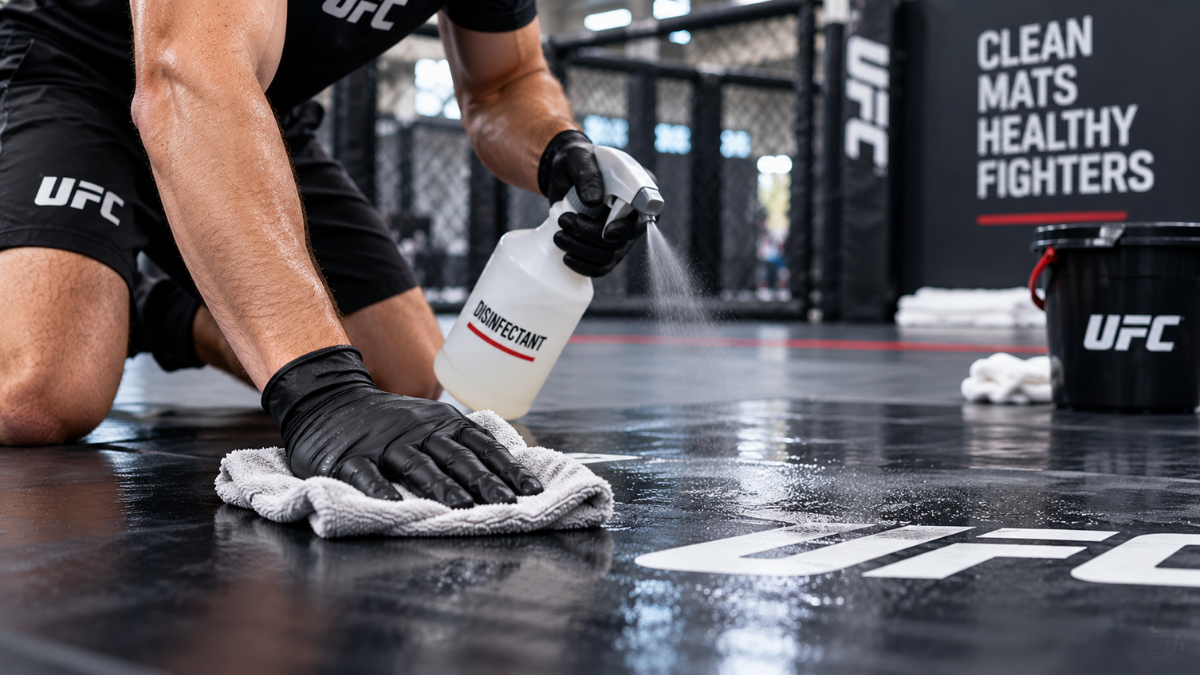
MMA and grappling gyms bring large numbers of people into contact with the same surfaces. Sweat, skin cells and other material can accumulate if cleaning procedures are inadequate.
The CDC recommends cleaning shared athletic equipment and surfaces regularly, with particular attention to areas that come into direct contact with bare skin.
This is also why blaming an individual fighter for every staph infection is overly simplistic. Transmission can involve direct contact, contaminated surfaces or shared personal items.
Shared Towels and Personal Equipment
Staph can also spread through contaminated objects.
Towels, washcloths, clothing, razors and other items that come into contact with skin should not be shared. The same principle applies to equipment that is not properly cleaned between users.
For an MMA fighter, good hygiene therefore extends beyond simply taking a shower.
What Do MMA Staph Infections Look Like?
One of the difficult things about staph infections is that they can initially resemble ordinary skin problems.
According to the CDC, possible signs include a painful area, redness, swelling, warmth and pus or other drainage. Some infections can look like an ordinary bump or even be mistaken for a spider bite.
A fighter may therefore notice something that initially looks insignificant.
That is exactly when caution matters.
Possible warning signs include:
- A painful red bump
- Increasing swelling
- Warmth around the affected area
- Pus or drainage
- A sore that appears to be getting worse
- Increasing pain around a cut or abrasion
- Fever or feeling generally unwell
Not every red mark is staph, however.
A mat burn, ingrown hair, insect bite, acne lesion or another skin condition can look similar. The appearance alone cannot reliably determine whether an infection is MRSA or another type of bacterial infection. Medical assessment may be necessary.
That is also why fighters should avoid diagnosing themselves from photographs or social-media discussions.
Can Staph Infections Become Serious?
Yes.
Many staph infections are limited to the skin, but the bacteria can sometimes spread beyond the original site.
The CDC warns that MRSA infections can cause serious complications, including bloodstream infections, pneumonia and sepsis.
Medical literature on athletes also highlights the broader problem. A review of skin infections in contact sports notes that bacterial infections can cause significant time away from training and competition, while combat athletes face particular exposure because of close physical contact.
This is why “fight through it” is not a sensible universal approach to a suspected infection.
A fighter may be willing to tolerate pain, but an untreated infection is a medical issue rather than simply a test of toughness.
How Do MMA Staph Infections Affect Fight Camps?
Even when a staph infection does not become a major medical emergency, it can disrupt an entire fight camp.
Training may need to be reduced or stopped while the infection is assessed and treated. A fighter may also have to avoid close contact with teammates to prevent transmission.
Medication can create another consideration.
Benoit Saint Denis publicly discussed having a staph infection shortly before his UFC 299 fight with Dustin Poirier 30-10-0. He said he was taking antibiotics and felt that the treatment, infection and weight cut all contributed to a difficult fight week and poor physical condition.
His experience shows why the timing of an infection can matter enormously for a professional fighter.
A problem that might be manageable for an ordinary person can become much more complicated when someone is simultaneously trying to maintain a championship-level training schedule, make weight and prepare for a five-round fight.
For a broader look at why MMA preparation involves so many different physical demands, readers can also explore our guide to Explaining MMA Fighting Styles.
Famous UFC and MMA Staph Infection Cases
Staph infections are not just a theoretical concern in combat sports. Several UFC fighters and MMA athletes have publicly discussed dealing with them.
Benoit Saint Denis
Saint Denis is one of the clearest examples of how an infection can affect a fighter’s performance.
Ahead of UFC 299, he developed a staph infection on his forehead. He sought medical treatment and took antibiotics but still proceeded with his fight against Poirier.
Saint Denis later explained that he felt tired throughout the week and struggled with his weight cut. He eventually lost by second-round knockout. Importantly, his comments do not prove that the infection caused the defeat, but they demonstrate how an infection and its treatment can complicate preparation.
Jack Della Maddalena
Jack Della Maddalena also revealed that he had dealt with staph before UFC 299.
His coach said Della Maddalena had been taking antibiotics and lost approximately a week of training. Despite that interruption, he went on to defeat Gilbert Burns by third-round stoppage.
His case offers a useful reminder: an infection does not necessarily prevent a fighter from competing, but it can still interfere with the preparation needed to reach the cage.
Santiago Ponzinibbio
Santiago Ponzinibbio experienced a much more serious health battle.
The UFC reported that Ponzinibbio developed a staph infection in 2019 that was later associated with a bone infection. He was told at one point that he might never fight again.
Ponzinibbio eventually returned to competition, but his experience demonstrates why athletes should not dismiss worsening infections.
His story is also covered in our previous article on Santiago Ponzinibbio’s hospital battle.
Mikey Musumeci
The issue reached the spotlight again in 2026 when Mikey Musumeci revealed that he had been dealing with a serious staph infection before his UFC BJJ 8 title defense.
After defeating Kevin Dantzler, Musumeci said he had suffered from a fever and had slept for around 20 hours before the event. UFC’s own report said he was dealing with the effects of a staph infection and competed while wearing long pants to cover the affected area.
Musumeci’s case generated considerable discussion because he competed despite feeling far from normal.
It also demonstrated how quickly a seemingly localized skin infection can become a much bigger issue for an athlete.
Not Every Skin Mark Is Staph
There is another important lesson from recent UFC history: fighters should not be diagnosed through social media.
In January 2026, Justin Gaethje faced online speculation that a mark on his neck was a staph infection ahead of UFC 324. Gaethje denied it and said the mark was from an ingrown hair.
Similarly, Paulo Costa previously rejected speculation about a mark on his foot, explaining that it was mat burn rather than staph.
These examples matter because photographs can be misleading. A visible bump or red patch does not automatically establish a diagnosis.
How Can MMA Fighters Prevent Staph Infections?
The good news is that fighters can take several practical steps to reduce their risk.
1. Shower After Training
One of the simplest habits is also one of the most important.
The CDC recommends showering immediately after exercise and maintaining good hand and body hygiene.
For an MMA fighter, that means making the post-training shower part of the routine rather than something that happens only when convenient.
2. Keep Cuts and Scrapes Covered
Small wounds should be cleaned and covered appropriately.
The CDC recommends keeping cuts and wounds covered with clean, dry bandages until they heal. Fighters should also avoid picking or popping suspicious sores.
This protects the athlete and can also reduce the possibility of spreading bacteria to teammates.
3. Do Not Share Towels or Razors
Personal hygiene items should remain personal.
Towels, washcloths, razors and clothing can potentially carry bacteria between people. The CDC specifically advises athletes not to share these items.
4. Clean Training Mats and Equipment
Gym owners and coaches have responsibilities too.
Shared equipment should be cleaned regularly, while surfaces that come into direct contact with bare skin deserve particular attention. The CDC recommends cleaning shared equipment after use and following the manufacturer’s instructions for appropriate disinfecting methods.
A clean gym cannot guarantee that nobody will develop an infection, but poor cleaning practices can create unnecessary risk.
5. Inspect Your Skin
Fighters spend so much time training that it can be easy to overlook small changes in the skin.
A quick check after training can help identify unusual redness, swelling, cuts or sores before they become bigger problems.
This is particularly important when something is painful, worsening or producing drainage.
6. Don’t Train Through an Undiagnosed Infection
This may be the most important rule.
If a fighter has a suspicious skin lesion, continuing to grapple with teammates can potentially expose other people.
The CDC advises athletes with suspected infections to seek medical care and recommends appropriate restrictions when active infections or wounds cannot be safely covered.
Missing a few sessions is frustrating.
Spreading an infection throughout an entire gym can be far worse.
What Should a Fighter Do If They Suspect Staph?
The first step should be medical evaluation rather than self-treatment.
A suspected staph infection cannot always be identified reliably by appearance. A healthcare professional can determine whether testing, wound care or medication is appropriate.
Fighters should avoid squeezing or popping suspicious bumps. They should keep the affected area covered with a clean, dry dressing when appropriate and follow professional instructions for wound care.
Treatment depends on the infection.
Some skin infections may require drainage, while bacterial infections may require antibiotics selected according to the suspected or confirmed organism and its antibiotic susceptibility. The correct treatment is therefore something a healthcare professional should determine rather than a fighter choosing medication independently.
If symptoms are severe, rapidly worsening or accompanied by fever or significant illness, prompt medical attention becomes particularly important.
This article is for general education and is not a substitute for medical diagnosis or treatment.
Why Do Staph Infections Matter So Much in MMA?
The answer goes beyond the fighter’s individual health.
MMA is built around training partners.
A professional fighter might spend hours every week wrestling, sparring and grappling with teammates. If an active infection is brought onto the mat, the potential consequences can extend beyond one person.
One infected athlete can potentially expose training partners, coaches and other gym members.
That is why infection prevention should be viewed as part of gym culture rather than simply an individual responsibility.
A serious MMA gym should have clear expectations around cleaning, wound care and when athletes should stay off the mats.
The same principle applies to professional teams. Fighters are valuable athletes, but protecting the wider training environment ultimately protects the fighter too.
Staph vs. Other Common MMA Skin Infections
Staph is not the only skin infection that concerns combat athletes.
Wrestlers, MMA fighters and other contact athletes can also encounter fungal infections such as ringworm and viral infections such as herpes simplex. Medical reviews of contact sports identify bacterial, fungal and viral skin infections as recurring problems in close-contact athletic environments.
That matters because not every rash or sore should be treated as staph.
The correct response to an unexplained skin problem is assessment, not guesswork.
Good hygiene practices can help reduce the risk across several types of infections at the same time.
Can Fighters Completely Prevent Staph?
No prevention strategy can reduce the risk to zero.
Staph bacteria are common, and combat sports naturally involve close contact. Even athletes who take hygiene seriously can develop infections.
The goal is risk reduction.
Regular showers, clean equipment, good wound care, avoiding shared personal items and recognizing suspicious skin changes early can all make a meaningful difference.
The most effective approach is therefore not fear.
It is consistency.
A fighter does not need to become obsessed with every mark on the skin. They do need to develop habits that make infection less likely and encourage early action when something genuinely looks wrong.
For readers interested in the wider reasons fights sometimes disappear from UFC cards, our guide on Why UFC Fights Are Cancelled? provides additional context on the many factors that can disrupt a matchup.
Final Thoughts
MMA staph infections are a genuine concern because combat sports combine several conditions that can make bacterial transmission easier: close skin-to-skin contact, shared training surfaces and frequent cuts or abrasions.
But staph is not something that should automatically be associated with dirty fighters or poorly maintained gyms. The bacteria are common, and infections can happen even when athletes take their health seriously.
What matters is how fighters and gyms respond.
Regular hygiene, clean mats and equipment, proper wound care and staying away from training when an infection is suspected can help protect the entire team. Most importantly, fighters should not attempt to diagnose or treat a potentially serious infection based solely on what it looks like.
The stories of athletes such as Benoit Saint Denis, Jack Della Maddalena, Santiago Ponzinibbio and Mikey Musumeci show just how differently staph can affect combat athletes from lost training time to serious medical complications.In MMA, toughness matters.Knowing when to protect your health and your training partners matters just as much.