


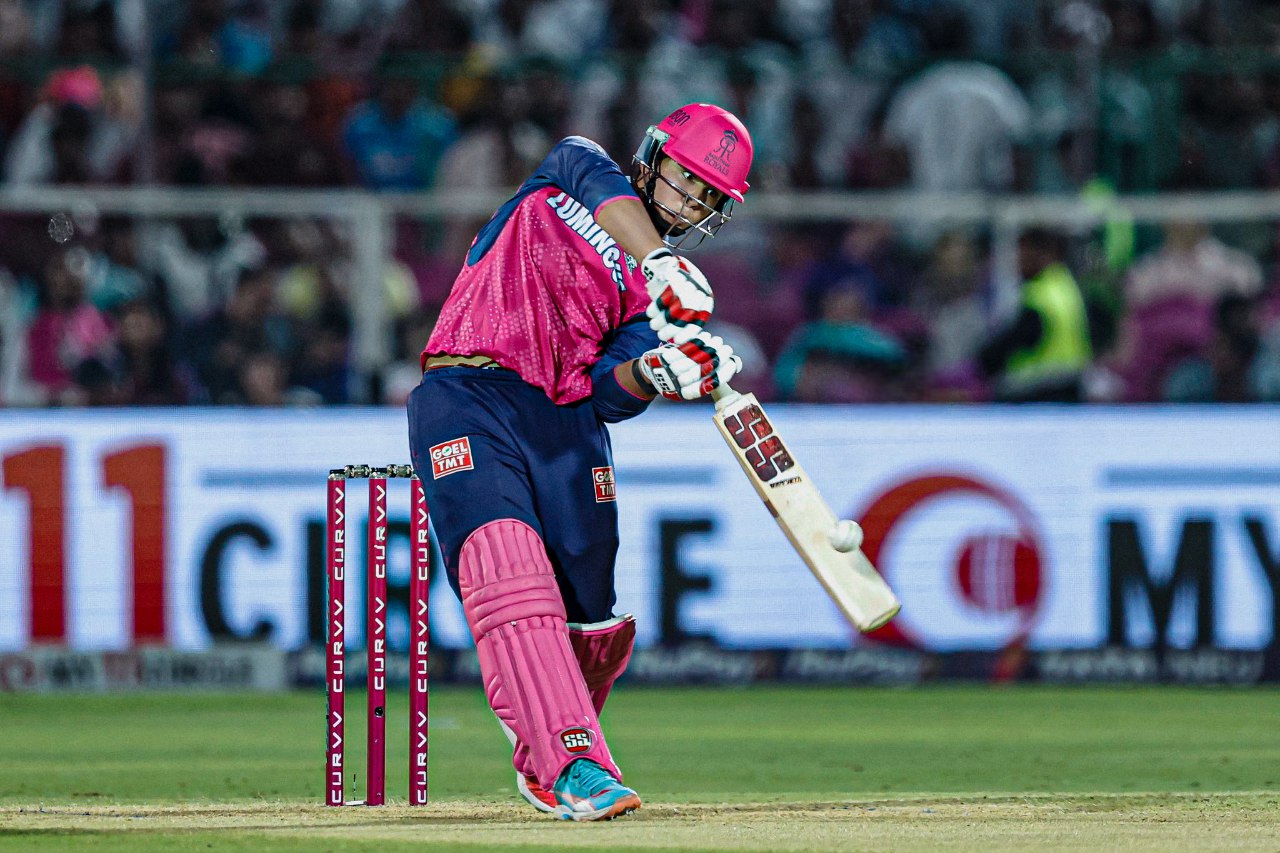
There are innings that win matches. There are innings that break records. And then, very rarely, there are innings that make you question everything you thought you knew about the limits of human ability — especially when the person holding the bat is barely old enough to sit for his board exams.
On December 24, 2025, at the JSCA Oval Ground in Ranchi, Vaibhav Suryavanshi walked out to bat for Bihar against Arunachal Pradesh in the Vijay Hazare Trophy Plate Group stage. What followed over the next 84 deliveries was not just a batting performance. It was a statement. A declaration. A glimpse into a future that Indian cricket has been quietly waiting for.
He scored 190 runs off 84 balls — 16 fours, 15 sixes, and a strike rate of 226.19. He was 14 years old.
The Morning That Belonged to One Boy
December 24 was supposed to be dominated by the big names. Rohit Sharma and Virat Kohli were both returning to the Vijay Hazare Trophy — that alone was enough to fill back pages and social media feeds. But sport has a beautiful way of humbling even the biggest narratives.
From the very first ball, Suryavanshi was in a different zone. He smashed his way to a fifty in just 25 balls, barely pausing to look around the ground. The hundred came in 36 balls — the second-fastest century by any Indian in List A cricket, just one delivery behind the record held by Punjab’s Anmolpreet Singh. By that point, the match had already become secondary. People were watching something else entirely.
Then came the phase between 100 and 150 — arguably the most devastating stretch of batting seen in Indian domestic cricket in recent memory. He reached his 150 in just 54 balls, shattering AB de Villiers’ long-standing world record for the fastest List A 150 (which stood at 64 balls). In a sport that worships de Villiers, breaking his record is not a small thing. It is the kind of milestone that gets whispered about in dressing rooms for years.
Bihar posted 261 for 2 in just 26.1 overs — scoring at nearly ten runs per over. And even when Suryavanshi was eventually dismissed for 190 by Techi Neri, the silence that followed felt like the silence after a piece of music ends — that brief moment where you realise what you just witnessed.
The Numbers That Tell the Story
Let the numbers breathe for a moment:
- 190 runs off 84 balls — Strike rate: 226.19
- 36-ball century — 2nd fastest by an Indian in List A cricket
- 54-ball 150 — A new world record, surpassing AB de Villiers
- 16 fours and 15 sixes — 154 runs from boundaries alone
- 158-run opening stand with Mangal Mahrour (33 off 43)
- 103-run stand with Piyush Singh (unbeaten on 29)
- His 190 also became the highest individual score by a player representing Bihar in List A cricket, surpassing the previous record of 156* by MD Rahmatullah
In terms of boundary runs, his tally of 154 placed him behind only Rohit Sharma, Martin Guptill, and Ishan Kishan in List A cricket history.
Not Just a One-Day Wonder — A Boy Collecting Records Like Trophies
What makes Suryavanshi’s 190 even more extraordinary is the context around it. This was not a flash of brilliance from an unknown teenager. This was the latest chapter in a story that has been building relentlessly.
His cricket journey started at the age of four in Tajpur, a small town in the Samastipur district of Bihar. By eight, his father Sanjiv — himself a passionate cricket lover — enrolled him at Manish Ojha’s GenNex Cricket Academy in Patna, travelling nearly 100 km each way on alternate days just so his son could train. That sacrifice is the kind of story that sits quietly behind every remarkable career.
By 2025, Vaibhav had already become the youngest player to be signed for the IPL when Rajasthan Royals picked him up. On his IPL debut, he hit his very first ball for six — of course he did — and later smashed a record 35-ball century, the fastest hundred in IPL history. He was 13.
In the months that followed, he scored centuries across the IPL, Youth ODIs, Youth Tests, India A fixtures, the Syed Mushtaq Ali Trophy, the U19 Asia Cup, and now the Vijay Hazare Trophy. No Indian cricketer has ever scored hundreds across such a wide range of competitions at this age. Not even close.
In November 2025, he scored 144 off just 42 balls for India A against UAE — his century coming off a stunning 32 deliveries. And in the final of the 2026 ICC Under-19 Cricket World Cup, he struck 175 off 80 balls against England, with 15 fours and 15 sixes.
The 190 in Ranchi was not an outlier. It was a pattern confirming itself.
What Makes Him Different
Watch Suryavanshi bat for even a few overs and you notice something that cannot be coached — stillness. For a teenager, there is a remarkable absence of panic in the way he plays. He does not scramble. He does not poke. When the ball is in his zone, he hits it. When it is not, he lets it go. That kind of decision-making usually comes with a decade of professional cricket. He has not even had a decade of anything.
His footwork against pace, his ability to pick lengths early, the way he hits through the line rather than around it — these are technical markers that suggest a boy who has spent a lot of time thinking about batting, not just doing it.
But beyond technique, what really stands out is confidence. There is no tentativeness in his approach, no deferring to the situation. Whether he is facing an IPL attack, an India A pace battery, or domestic bowlers, the intent is identical: take the game on, and take it on immediately.
The Conversation India Was Already Having
It is impossible to write about Vaibhav Suryavanshi without acknowledging the conversation that has surrounded him — particularly around his age. Some former cricketers and commentators, including former Pakistan fast bowler Junaid Khan, have raised eyebrows at the power hitting from someone officially born on March 27, 2011. His father Sanjiv has maintained that the official date of birth is accurate and that Vaibhav has consistently cleared BCCI-mandated bone tests since he was eight and a half years old.
Regardless of where one stands on that debate, the cricket itself is not in dispute. The records exist. The deliveries bowled were real. The sixes landed where they landed. And every credible observer who has watched him in person has noted that his technique, footwork, and mental approach are extraordinary — whether he is 14 or a few years older.
In January 2025, President Droupadi Murmu honoured him with the Pradhan Mantri Rashtriya Bal Puraskar — India’s highest civilian award for children, in the sports category. That recognition came before the 190 in Ranchi. Now, it feels even more deserved.
A Day That Rohit and Virat Could Not Steal
There is something almost poetic about the timing. Two of India’s greatest cricketers returned to domestic cricket on the same day. In any other year, that would have been the undisputed headline. But sport does not care about narratives. It only cares about what happens on the ground.
Vaibhav Suryavanshi made the greatest players of his generation invisible for a day — not through arrogance, not through hype, but through 84 balls of the most thrilling batting that Indian domestic cricket has seen in a very long time.
The Journey Has Only Just Begun
Every now and then, a cricketer arrives who doesn’t feel like he belongs to the moment — he feels like he belongs to a much larger story. Sachin Tendulkar was one. Virat Kohli was one. Whether Vaibhav Suryavanshi becomes part of that lineage, only time will tell.
But what happened in Ranchi on December 24, 2025, was not normal. A 14-year-old boy, batting for Bihar in a domestic tournament, broke a world record set by one of the greatest batsmen the game has ever seen. He did it with 15 sixes and a composure that made grown men in commentary boxes scramble for the right words.
The scoreboard read 190 off 84 balls. The record books now read differently. And somewhere in Bihar, a father who used to drive 100 km on alternate days to get his son to practice probably felt that every kilometre was worth it.
Indian cricket has found something rare. Something electric. And the world is only just beginning to pay attention.


