
UFC Mexican fighters have become some of the promotion’s biggest stars over the past decade. They have won championships, headlined major events, and helped transform Mexico into one of the UFC’s fastest-growing markets. Their success reflects years of development, better coaching, and a new generation of athletes who compete at the highest level in mixed martial arts. Mexico now stands alongside nations like Brazil in producing world-class talent you can see a similar breakdown in our Top 10 Brazilian Fighters of UFC All Time.


What Are UFC Mexican Fighters?
UFC Mexican fighters are athletes born in Mexico who compete inside the Ultimate Fighting Championship. They represent the country’s growing influence in mixed martial arts across several weight divisions. While boxing remains Mexico’s most famous combat sport, MMA has steadily become another source of national pride.
The UFC has invested heavily in Mexico during recent years. Events in Mexico City, the UFC Performance Institute, and increased scouting have helped develop local talent. Those investments have produced world champions who now inspire the next generation of Mexican fighters.
Unlike earlier generations, today’s Mexican fighters enter professional MMA with complete skill sets. They no longer rely only on boxing or kickboxing. Most now combine striking, wrestling, Brazilian Jiu Jitsu, and modern strength training before reaching the UFC.
How UFC Mexican Fighters Rose to International Success
Mexico built its reputation through boxing long before MMA became popular. That striking tradition gave many early fighters a strong technical foundation. As gyms expanded across the country, coaches began adding wrestling and grappling to create more complete mixed martial artists.
The launch of The Ultimate Fighter Latin America became another major turning point. The reality series introduced talented fighters from Mexico and Latin America to a worldwide audience. Several future UFC contenders used that platform to earn contracts and accelerate their careers.
The UFC also recognized Mexico’s passionate fan base. The promotion increased its presence by hosting regular events in Mexico City and opening the UFC Performance Institute there. Those decisions improved training opportunities and gave young athletes direct access to world-class coaching. For a full account of that history, the official UFC feature on Mexican fighters traces the journey from Efrain Escudero’s 2008 debut to today’s champions.
Brandon Moreno Changed the Future of UFC Mexican Fighters
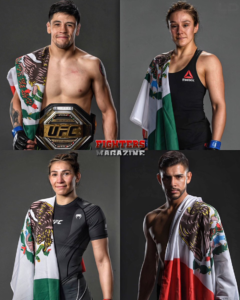
No discussion about UFC Mexican fighters begins anywhere other than Brandon Moreno. He became the first Mexican-born UFC champion when he defeated Deiveson Figueiredo to capture the flyweight title in 2021. That victory remains one of the most important moments in Mexican MMA history.
Moreno earned his success through consistency instead of physical dominance. His cardio, scrambling ability, and calm decision making allowed him to compete with the division’s best athletes. He repeatedly showed that technical intelligence often matters more than size or power inside the Octagon.
His rivalry with Figueiredo also changed the flyweight division. Their four championship fights produced some of the highest-level competition the weight class has ever seen. Every bout increased Moreno’s popularity while helping the UFC expand its audience throughout Mexico.
Moreno’s influence extends beyond championship belts. Young fighters across Mexico now believe they can reach the top because someone from their country has already done it. That confidence may become his greatest contribution to the sport.
Alexa Grasso Became Mexico’s First Female UFC Champion
Alexa Grasso added another historic achievement for UFC Mexican fighters when she defeated Valentina Shevchenko to become the UFC women’s flyweight champion. She became the first Mexican woman to win a UFC championship and immediately joined the country’s greatest combat sports athletes.
Grasso entered the UFC with polished boxing skills, but her development never stopped. She improved her wrestling, submission defense, and overall fight IQ until she became one of the division’s most complete competitors. Her championship victory reflected years of steady improvement instead of one breakthrough performance.
Many fans remember her submission finish against Shevchenko. That result surprised people because Grasso had built her reputation as a striker. The victory proved she had developed into a complete mixed martial artist capable of winning in multiple ways.
Her championship also carried broader importance. It showed that female fighters from Mexico could become global stars in the UFC. That achievement has encouraged more young women to pursue careers in professional MMA.
Yair Rodriguez Brought Creativity to UFC Mexican Fighters
Yair Rodriguez represents a completely different style from Brandon Moreno and Alexa Grasso. His game relies on speed, unpredictable striking, and constant movement rather than traditional pressure. That approach has produced some of the most spectacular knockouts and finishes in UFC history.
Rodriguez became famous for techniques that many fighters rarely attempt. Spinning attacks, jumping kicks, and creative combinations made him one of the promotion’s most entertaining athletes. His knockout victory over Chan Sung Jung remains one of the greatest finishes ever seen inside the Octagon.
While Rodriguez has experienced setbacks during his career, he has consistently competed against elite opponents. His interim featherweight championship confirmed his position among the division’s best fighters. More importantly, he proved Mexican athletes could succeed with styles far different from traditional boxing.
How UFC Mexican Fighters Continue to Evolve
One of the biggest differences between today’s athletes and earlier generations involves their preparation. Modern UFC Mexican fighters usually begin learning wrestling and Brazilian Jiu Jitsu at a young age. Earlier competitors often added those skills much later in their careers.
That change has created more complete athletes. Fighters no longer depend on one specialty because they understand every area of MMA. They can strike, wrestle, defend submissions, and adjust tactics throughout a fight. Those improvements have helped Mexico produce contenders across multiple weight classes instead of relying on a few standout individuals.
Another important factor involves international experience. Many Mexican fighters now train with elite camps in the United States while maintaining strong connections to gyms in Mexico. That balance allows them to combine local fighting traditions with modern MMA techniques.
Irene Aldana Continues the Rise of UFC Mexican Fighters
Irene Aldana has played an important role in the growth of UFC Mexican fighters. She became the first Mexican woman to challenge for the UFC bantamweight championship, proving that Mexico could consistently produce elite female contenders. Although she fell short in her title fight, her achievements helped strengthen the country’s reputation in women’s MMA.
Aldana built her career around disciplined boxing and steady technical improvement. She never relied on flashy finishes or bold predictions. Instead, she earned victories through clean combinations, smart movement, and patience inside the cage. That professional approach has kept her among the division’s top competitors for years.
Her success also highlights another important trend. Mexican fighters now compete for championships in multiple divisions instead of concentrating their talent in one weight class. That wider presence reflects the country’s growing depth rather than the success of a single generation.
New UFC Mexican Fighters Are Ready to Continue the Tradition
The next generation of UFC Mexican fighters has already started making an impact. Manuel Torres continues to attract attention because of his aggressive style and finishing ability. His willingness to exchange strikes and hunt early finishes has quickly made him one of the lightweight division’s most entertaining prospects.
Edgar Chairez has also shown steady improvement inside the flyweight division. He continues developing against experienced opponents while gaining valuable UFC experience. Every appearance helps him build confidence against increasingly difficult competition.
Several younger athletes are also working their way toward ranked competition. Many now train at the UFC Performance Institute in Mexico City while spending time at elite international gyms. That combination gives them better preparation than previous generations ever enjoyed. Mexico isn’t alone in producing tight-knit national pipelines like this — our Top 10 UFC Dagestan Fighters of All Time piece looks at another region doing the same.
Why UFC Mexican Fighters Keep Producing Champions
The success of UFC Mexican fighters is no longer a coincidence. Mexico now has a complete development system that supports athletes from amateur competition to the UFC. Better coaching, improved facilities, and greater international exposure continue producing more complete mixed martial artists.
The UFC Performance Institute in Mexico City has become one of the biggest reasons behind that progress. Fighters receive world class coaching, sports science support, nutrition guidance, and rehabilitation services without leaving the country. Those resources help athletes develop faster while reducing the gap between Mexican prospects and established UFC veterans.
International experience has also become a major advantage. Many fighters split their training between Mexico and the United States. They continue learning from local coaches while testing themselves against some of the world’s best athletes. That balance has produced smarter and more adaptable competitors.
What Makes UFC Mexican Fighters Different From Previous Generations
Earlier generations often entered MMA after successful boxing or kickboxing careers. They possessed excellent striking but usually needed years to improve their wrestling and grappling. That learning process slowed their progress against well rounded opponents.
Today’s UFC Mexican fighters follow a completely different path. Most begin training mixed martial arts from a young age instead of switching later from another combat sport. They learn striking, wrestling, Brazilian Jiu Jitsu, and cage control together rather than treating them as separate skills.
This change explains why Mexico now produces contenders across multiple divisions. Modern fighters arrive in the UFC with fewer technical weaknesses and far more tactical flexibility. They no longer depend on one strength because they understand every phase of mixed martial arts.
The Biggest Lesson From the Success of UFC Mexican Fighters
Many articles credit Mexico’s boxing history for the country’s MMA success. That explanation tells only part of the story. Boxing created strong strikers, but complete mixed martial artists require far more than punching ability.
The real difference came when Mexican gyms embraced wrestling and Brazilian Jiu Jitsu instead of treating them as secondary skills. That shift transformed talented strikers into complete competitors capable of winning championship fights against the world’s best athletes. It also explains why recent champions have succeeded through submissions, wrestling exchanges, and tactical decisions instead of striking alone.
This evolution often goes unnoticed because fans naturally remember spectacular knockouts. In reality, Mexico’s greatest improvement has happened on the ground. That technical growth may become the country’s biggest advantage over the next decade.
Who Is the Greatest UFC Mexican Fighter?
Choosing the greatest UFC Mexican fighter depends on the criteria used. Brandon Moreno remains the strongest candidate because he became the first Mexican-born UFC champion and successfully defended his title against elite competition. His achievements permanently changed the sport in Mexico.
Alexa Grasso deserves similar recognition after becoming the first Mexican woman to capture UFC gold. Her championship victory expanded opportunities for future female fighters throughout the country. Yair Rodriguez also belongs in the discussion because of his creativity and interim featherweight championship.
Future generations may eventually surpass those accomplishments. The current talent pipeline suggests that more Mexican champions will emerge over the coming years. That possibility reflects the strength of the country’s development system rather than short-term success.

Frequently Asked Questions About UFC Mexican Fighters
Who was the first Mexican-born UFC champion? Brandon Moreno became the first Mexican-born UFC champion when he defeated Deiveson Figueiredo to win the UFC flyweight title in 2021.
Who was the first Mexican woman to become a UFC champion? Alexa Grasso became the first Mexican woman to win a UFC championship after defeating Valentina Shevchenko for the women’s flyweight title.
Which UFC Mexican fighter has the most exciting striking style? Many fans consider Yair Rodriguez the most creative striker among UFC Mexican fighters because of his unpredictable kicks, spinning attacks, and highlight reel finishes.
Why are UFC Mexican fighters becoming more successful? Improved coaching, stronger wrestling programs, better Brazilian Jiu Jitsu instruction, and the UFC Performance Institute in Mexico City have all helped produce more complete fighters.
Conclusion
UFC Mexican fighters have transformed the country’s place in mixed martial arts through championships, technical excellence, and consistent development. Brandon Moreno, Alexa Grasso, Yair Rodriguez, and Irene Aldana each contributed to that progress in different ways. Together, they proved that Mexico can produce world class talent across multiple divisions.
The future looks even brighter than the present. Young athletes now receive better coaching, earlier MMA education, and greater international opportunities than any previous generation. That combination should continue producing new contenders and future champions. Mexico has already secured its place among the UFC’s strongest nations, and its influence on the sport continues to grow with every new generation of fighters.